why I built the lens.

Here's the honest truth: I've never actually had my aura read. I only ever saw the pictures — those dreamy, color-soaked portraits people post after a booth in some city I wasn't in. I wanted one. I just couldn't get to one. That gap is the whole reason aura.refract exists.
The photos were everywhere; the actual thing never was. A booth in LA or New York or London, a line down the block, a price, one specific night. If you weren't there — and most of us never are — you didn't get one. I'm an Arkansas girl; it gets to me last. The most magical part of the whole resurgence was also the least reachable.
I want to be careful here. I'm not knocking aura photographers. Some of the people running booths right now are doing the best work in the category — Halo, Radiant Human, the originals. The aesthetic they pioneered is the only reason this whole resurgence is happening. We stand on their shoulders. The booth, the polaroid, the handpads — that's an art form and they did it first.
But the booth has a ceiling. One operator, one camera, one set of handpads, ten minutes per read. The math doesn't scale and the math was never going to scale. Forty reads a night, in one city, on one specific Thursday. If you weren't there, you weren't getting one. If you weren't in LA or New York or London, you basically never were.
The reason I actually ran with it.
Here's the part that isn't in any pitch deck. I'd been turning the idea over for weeks, half-convinced it was too big for me. Then I asked my stepdaughter Jacey if she wanted to build it with me.
Jacey is quiet. Mysterious in the way that makes a room lean in a little — she doesn't perform excitement, so you learn to read the small tells. So when I floated the idea — over text, the two of us just chatting — and she lit up, I felt it right through the screen. When someone that measured gets that excited, you stop second-guessing and you go. That was my biofield reading, honestly: the way she texted back. So I built the company for her. In honor of her light. I'm not even sure she knows what just happened — but she got me.

The constraint was always distribution.
The booth is the bottleneck. So we asked the dumb-obvious question: what if the booth was the camera you already have?
The honest answer is that the camera on your laptop sees roughly the same light an aura camera does. It's not a clinical biofield reader — the booth version isn't either — but it can faithfully refract the color, contrast, and temperature of the light coming off you and return a portrait. Different stack, same aesthetic, infinite distribution.
"You can put a booth at one party in Bushwick. You can put a lens in every browser on Earth. Pick one."
That's the line I kept coming back to when we were arguing about the build. We're not replacing the booth. We're adding a layer underneath it that anyone, anywhere, can use, for free, in ten seconds.
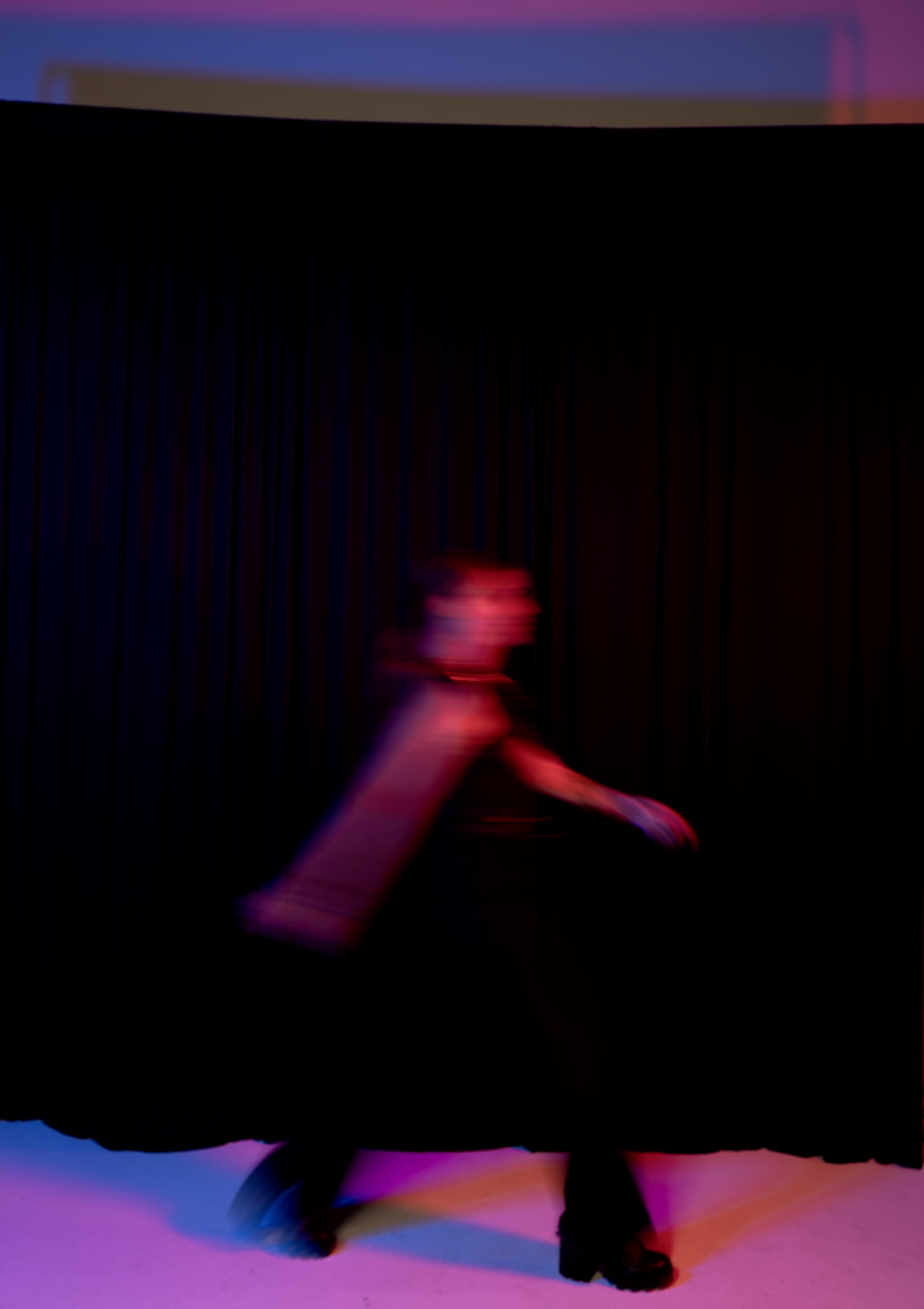
What we kept. What we cut.
We kept the seven-band spectrum. We kept the dominant-color reading. We kept the part where the aesthetic of the final image is supposed to feel sacred. We kept lowercase italics because the brand had to feel like the early Halo days, not like a venture-backed tech product.
We cut handpads. We cut waiting. We cut the polaroid as the only delivery format. We cut the geographic constraint. We cut the price.
And we cut the part where we'd pretend it was anything other than what it is. We measure light. The reading is honest about that. People are smarter than the category gives them credit for — they don't need to be told they're connecting to the cosmos to enjoy a beautiful portrait of their light.
Why we'll do events, too.
Because the room matters. Because being there with people who came specifically for this is its own kind of magic — the kind I kept seeing in those pictures. So bringing the lens into real rooms is exactly where we're headed: pop-ups and nights where your light gets read in person. The web app is the engine. The events will be the soul.
Both, not either.
If you read this far, the lens is already open. Refract once. Then refract once more in different light, and notice what changes. That's where the actual fun starts.
So this one's for you, Jacey.
— Ashley